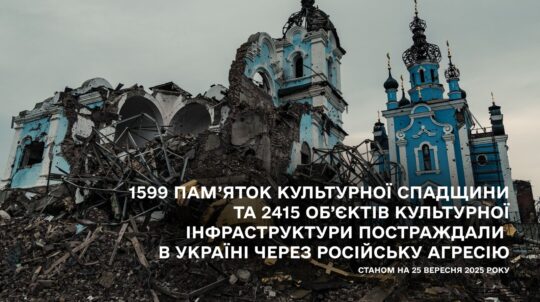
As of November 25, russia’s aggression has destroyed or damaged 1,630 cultural heritage sites and 2,437 cultural infrastructure facilities in Ukraine.
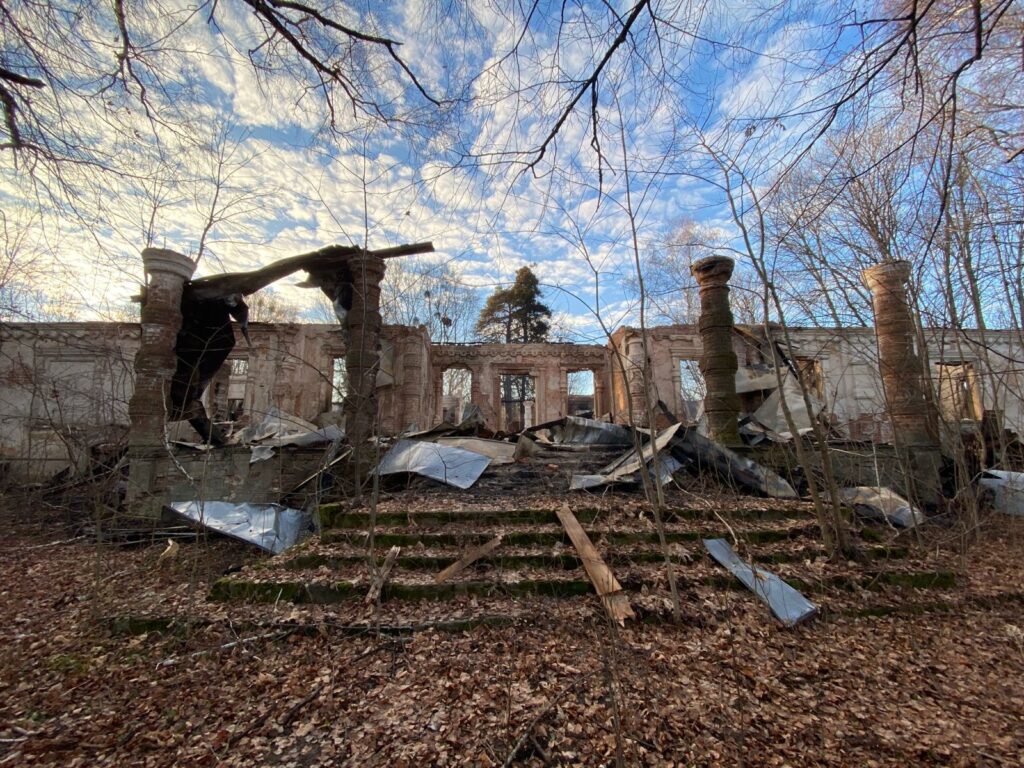
Among the damaged cultural heritage sites: 151 have national significance, 1,326 have local significance, 153 are newly identified heritage sites.
A total of 36 cultural heritage sites have been completely destroyed. Damage has been recorded in 18 regions, with the most severe losses in Kharkiv region — 344 sites, Kherson — 295, Odesa — 182, Donetsk — 175, and Kyiv region together with the city of Kyiv — 161.
At the same time, as a result of shelling and hostilities, 2,437 cultural infrastructure facilities have been affected, 498 of which have been completely destroyed.
The greatest losses to cultural infrastructure have occurred in the Donetsk, Kharkiv, Kherson, Kyiv, Sumy, and Mykolaiv regions.
Overall, the following facilities have been damaged:
- cultural hubs – 1,187
- libraries – 853
- arts education institutions – 187
- museums and galleries – 135
- theaters, cinemas, and philharmonic halls – 50
- parks and zoos – 11
- nature and historical reserves – 9
- circuses – 4
- a film studio in Kyiv
Destruction has been recorded across 328 territorial communities throughout Ukraine. The highest numbers are in the communities of Donetsk (46), Sumy (37), Kharkiv (33), Chernihiv (32), Zaporizhzhia (29), Mykolaiv (23), Dnipropetrovsk (22), Kyiv (21), and Luhansk (12) regions.
Almost the entire territory of Luhansk region, as well as large parts of Zaporizhzhia, Donetsk, and Kherson regions, remain under temporary occupation. This makes it impossible to determine the exact number of cultural facilities affected by hostilities and occupation.
In response to the widespread destruction caused by russian aggression, the Ministry of Culture of Ukraine, together with international partners, has established the Ukrainian Cultural Heritage Fund. The Fund’s mission is to mobilize national and international resources to protect, restore, and develop Ukraine’s cultural heritage and culture as a foundation of identity, democracy, and European belonging.
The Ministry and its partners continue to work together to address the consequences of the destruction and to restore Ukraine’s cultural potential.